

Posted on 28th April 2026, by Admin
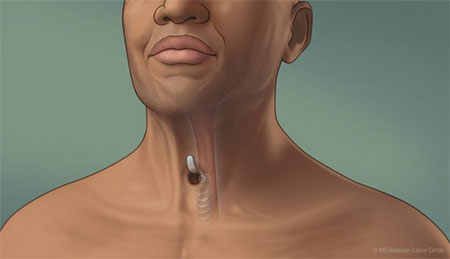
This concern is completely natural. A laryngectomy is a surgery in which the larynx (voice box) is removed, usually for advanced laryngeal or hypopharyngeal cancer. Since the vocal cords are part of the larynx, normal voice is affected after surgery.
👉 Many patients are able to communicate effectively again with proper rehabilitation.
After total laryngectomy:
Today, several rehabilitation methods help patients speak again.
1. Voice Prosthesis (Tracheoesophageal Speech)
A small prosthetic device can be placed between the windpipe and food pipe.
This allows air to create sound, helping patients speak with training. Benefits:
More natural sounding voice compared to some other methods Good communication in daily life Commonly used rehabilitation method
2. Esophageal Speech
Patients learn to use swallowed air to create sound. Benefits:
No device needed
Challenges:
Requires training and practice
Not suitable for everyone
3. Electrolarynx
A handheld device creates vibrations that help produce speech. Benefits:
Useful early option
Can help when other methods are not possible
Can Patients Communicate Normally?
Many patients are able to:
Talk with family
Use phone in many situations
Interact socially
Return to routine life and work
Speech quality varies from person to person, but meaningful
communication is achievable.
Importance of Speech Therapy
Speech-language rehabilitation is an important part of recovery.
A trained therapist can help with:
Voice training
Communication techniques
Swallowing guidance (when needed)
Confidence building
How Long Does It Take to Learn?
Some patients begin communication early with support, while others need more time and practice.
Regular follow-up and motivation are important.
Will I ever speak again after laryngectomy?
Many patients are able to communicate again using rehabilitation methods.
Which voice method is best?
It depends on the patient’s condition, surgery details, and rehabilitation needs.
Is speech therapy necessary?
Speech therapy is often very helpful in improving communication outcomes.
Can I return to work after laryngectomy?
Many patients return to daily activities and, in many cases, professional work.
Losing the natural voice can feel overwhelming, but modern rehabilitation offers hope.
A laryngectomy changes the way a person speaks—it does not end communication.
With training, support, and follow-up, many patients go on to live active and connected lives.
When to Seek Medical Advice
Consult a qualified specialist if you or your family member has: Persistent hoarseness
Difficulty swallowing
Breathing difficulty
Neck swelling
Diagnosis requiring laryngeal surgery
Early consultation helps in treatment planning and rehabilitation.
This article is for patient education only and does not replace professional medical advice. Please consult a qualified healthcare professional for diagnosis and treatment.